FORD CL20 info needed

Skidsteer Forum - Bobcat, New Holland, Case, John Deere

Help Support Skidsteer:

Bonez

Well-known member
Joined
May 14, 2026
Messages
82
City & State/Province
3rd Rock from the Sun
I am looking for info on my Ford CL20 skidsteer, All the tag info is as follows, I just cant seem to find info online anywhere ?

Ford CL20 Serial# 8162 on body tag
ONAN motor model and spec# NHC-MS/37623
Serial# L793502795
oil capacity 5.5 OTS

What I need to know is ....
* What type of Hydraulic oil is used for the lift cylinders ( it looks like motor oil, golden) where hydraulic is usually red so Im confused ( its a tank in the rear above motor)
* What battery I need that will fit under the floor plate
* Replacement seat belt
* All Hoses
* Does anyone have a downloadable operator and repair manual

I just wish it was labled better, I assume theyre missing from age?

Thank you for any help as Im trying to get this fixed asap to use.
 
I am looking for info on my Ford CL20 skidsteer, All the tag info is as follows, I just cant seem to find info online anywhere ?

Ford CL20 Serial# 8162 on body tag
ONAN motor model and spec# NHC-MS/37623
Serial# L793502795
oil capacity 5.5 OTS

What I need to know is ....
* What type of Hydraulic oil is used for the lift cylinders ( it looks like motor oil, golden) where hydraulic is usually red so Im confused ( its a tank in the rear above motor)
* What battery I need that will fit under the floor plate
* Replacement seat belt
* All Hoses
* Does anyone have a downloadable operator and repair manual

I just wish it was labled better, I assume theyre missing from age?

Thank you for any help as Im trying to get this fixed asap to use.
As for the hydraulic oil, red hydraulic oil is normally automotive transmission fluid.

The only difference between engine oil and hydraulic oil is the additives they add to it. The base oil is identical. For example engine oils will have detergents in them where hydraulic oils will have anti-foaming agents in them.

On a lot of older machines regular engine oil was used but you have to be careful with the newer oils because some of the additives can eat up seals. You can still get basic oil with no additives but in my opinion using a decent hydraulic oil like AW46 in an older machine is a better option and normally cheaper.

There are a lot of opinions on what oils should be used for different machines so you can search the forums for more info.
 
Like brdgbldr said, a lot of the older machine were designed to use same oil in motors and hydraulic systems
the issues become a sorted of
as over time, and different owners and owners thoughts and idea;''s on what THEY want to put in it
so the reality is anything could be in your system right now, from several types of oil to several types of hydraulic fluids and who knows what else?

I am NOT an expert, and not claiming to be one either!
But I would maybe try contacting a OLD NH/Ford dealer and ask them what they recommend you use!
typically again many older machine simply ran 10w30 motor oil

I know my late 90's machine calls for it, and thats what I been using in it,
but I also started off MY ownership with this skid steer by doing a complete(or as much as I could) whole system drain
then refilled (10w30 dealer recommended made by NH for my machine) and a new filter and ran for a 100 hrs and redid
I know many won't do this, all the more so now with much higher costs
but IMO, its always best to start off with as clean a slate as possible on what fluids are in and not a bunch of who knows what mixed
some CLAIM all fluids can mix, some say its not good, and they can cause issues
this is kinda a loaded debate , where everyone has there own opinion

I fall into the line of I like to TRY to stick with one brand/type of oil in things when I can IF I plan on long term ownership of something that is
with hopes it helps things run longer with less issues

but who really knows
some times its I think just a mental game we play over any real added benefits
bigger issue might just be changing fluids as needed or sooner than needed, keep at right amounts, use good olil/filters and don't beat the snot of your equipment, HAHA!
but even that doesn't make things a SURE thing for lasting longer, some times crap just breaks, lots of junk being made now a days!

SO<
as for what fluid you have or should use
I think
it comes down to what you want at this point!
I would do my best to flush out all of UNKNOWN fluid first) then start sort of a new with what every fluid you prefer!

as for how much
since your not sure, maybe try catching the fluid you drain out and measuring how much, then add back like amount, on hydraulic the tank maybe has a level indicator on it

and on your motor
same thing, drain catch measure, refill a little less and check, cold, run a bit up to operating temps, let sit a bit and check again, add more as needed using dip stick

doing this should get you where you need to be!
good luck


As for the hydraulic oil, red hydraulic oil is normally automotive transmission fluid.

The only difference between engine oil and hydraulic oil is the additives they add to it. The base oil is identical. For example engine oils will have detergents in them where hydraulic oils will have anti-foaming agents in them.

On a lot of older machines regular engine oil was used but you have to be careful with the newer oils because some of the additives can eat up seals. You can still get basic oil with no additives but in my opinion using a decent hydraulic oil like AW46 in an older machine is a better option and normally cheaper.

There are a lot of opinions on what oils should be used for different machines so you can search the forums for more info.
Thanks, I worked in a machine shop and Hydraulic was usually red and stank ( wasnt like tranny fluid ) but it is marked on a tag to use W30 so I assume straight weight oil?
 
Like brdgbldr said, a lot of the older machine were designed to use same oil in motors and hydraulic systems
the issues become a sorted of
as over time, and different owners and owners thoughts and idea;''s on what THEY want to put in it
so the reality is anything could be in your system right now, from several types of oil to several types of hydraulic fluids and who knows what else?

I am NOT an expert, and not claiming to be one either!
But I would maybe try contacting a OLD NH/Ford dealer and ask them what they recommend you use!
typically again many older machine simply ran 10w30 motor oil

I know my late 90's machine calls for it, and thats what I been using in it,
but I also started off MY ownership with this skid steer by doing a complete(or as much as I could) whole system drain
then refilled (10w30 dealer recommended made by NH for my machine) and a new filter and ran for a 100 hrs and redid
I know many won't do this, all the more so now with much higher costs
but IMO, its always best to start off with as clean a slate as possible on what fluids are in and not a bunch of who knows what mixed
some CLAIM all fluids can mix, some say its not good, and they can cause issues
this is kinda a loaded debate , where everyone has there own opinion

I fall into the line of I like to TRY to stick with one brand/type of oil in things when I can IF I plan on long term ownership of something that is
with hopes it helps things run longer with less issues

but who really knows
some times its I think just a mental game we play over any real added benefits
bigger issue might just be changing fluids as needed or sooner than needed, keep at right amounts, use good olil/filters and don't beat the snot of your equipment, HAHA!
but even that doesn't make things a SURE thing for lasting longer, some times crap just breaks, lots of junk being made now a days!

SO<
as for what fluid you have or should use
I think
it comes down to what you want at this point!
I would do my best to flush out all of UNKNOWN fluid first) then start sort of a new with what every fluid you prefer!

as for how much
since your not sure, maybe try catching the fluid you drain out and measuring how much, then add back like amount, on hydraulic the tank maybe has a level indicator on it

and on your motor
same thing, drain catch measure, refill a little less and check, cold, run a bit up to operating temps, let sit a bit and check again, add more as needed using dip stick

doing this should get you where you need to be!
good luck


Agreed, This has sat in the weather for 10 years, I dont want to cycle the fluids through the system and want to drain it all and flush since all the hoses are bad anyways I know some moisture got in there somewhere.... I want to change the motor oil first before I get it running so its fresh and doesnt damage a bearing, I spent the day yesterday cleaning everything out, all the pine needles , dirt and grime . Blowing out with a blower, compressor and air wand, hose and scrubbed with simple green. I got the majority of it but it had to rain before I got to it so it made it a little difficult, but the next cleaning hopefully I have a power washer and deep clean it all. I need to remove all the hoses and drain then get new replacements. I like to do things right so things last and not break down, First I need to get it in the shop so I can get to work on it out of the sun.... The battery I really need to get but I cant find any references on which to get that will fit properly
 
just a word of caution, when your using a power washer, they can many times do more harm than good
and push water into places it shouldn;t be
all the more so IMO on older machines in which gaskets and hoses and things can be old dry and failing

I personally would rather soak with good de greaser, and rinse with a basic hose, than pressure wash many things

yes a pressure washer can make easier faster work of cleanings, but I have seen a lot of problems happen after using one

so use caution if you do!
 
As an Amazon Associate we earn from qualifying purchases. Product prices and availability are accurate as of the date/time indicated and are subject to change.
just a word of caution, when your using a power washer, they can many times do more harm than good
and push water into places it shouldn;t be
all the more so IMO on older machines in which gaskets and hoses and things can be old dry and failing

I personally would rather soak with good de greaser, and rinse with a basic hose, than pressure wash many things

yes a pressure washer can make easier faster work of cleanings, but I have seen a lot of problems happen after using one

so use caution if you do!
I know , it would only be used to remove loose paint , algea/moss and the grime... never use on hoses, fittings and delicate stuff... just caked on grime and buildup
 
I know , it would only be used to remove loose paint , algea/moss and the grime... never use on hoses, fittings and delicate stuff... just caked on grime and buildup
Be careful with the wiring when pressure washing. Some of the wires may be corroded and can snap off at the connectors. You may want to disconnect, check and clean all of the connections and use a dielectric grease when you put them back together to keep corrosion down and water out. Also, make sure to clean all of your grounding points.
 
Be careful with the wiring when pressure washing. Some of the wires may be corroded and can snap off at the connectors. You may want to disconnect, check and clean all of the connections and use a dielectric grease when you put them back together to keep corrosion down and water out. Also, make sure to clean all of your grounding points.
Yes I plan to go through it this winter as a project making new wire harnesses, adding a couple overhead fans, LED lights , paint and just bring it back to life.
 
I don't recall what battery your's has in it, (or if it had one at all) but here is a PDF of Group sizes for automotive and light commercial vehicles. If you are starting from scratch you will need to measure the physical space you have, the post type and location you have (or desire), and (the hard part) determine the CCA you need for your particular engine.

https://batterycouncil.org/wp-content/uploads/2023/10/BCI-Group-Sizes.pdf
 
Hoses: Generally best to take to a good parts store and let them make them for you. Might want to just do a couple to start with if you're not sure who you're dealing with. Also makes it easier to remember what went where.
 
I don't recall what battery your's has in it, (or if it had one at all) but here is a PDF of Group sizes for automotive and light commercial vehicles. If you are starting from scratch you will need to measure the physical space you have, the post type and location you have (or desire), and (the hard part) determine the CCA you need for your particular engine.

https://batterycouncil.org/wp-content/uploads/2023/10/BCI-Group-Sizes.pdf
Ive done that and comes back with several groups.... no clue which is the correct one and no clue on CCA as well?
 
Personally, I have almost always gone with the highest CCA battery that will fit easily and securely in the space provided for the battery.
This has always been important for me because I live where it gets 20 below F, regularly in the winter. When you need your machine to start, you need your machine to start.
Unless you have sub standard wiring, it is pretty hard to have too many CCA in a battery that is going into most skid steers or tractors. JMHO.
 
Personally, I have almost always gone with the highest CCA battery that will fit easily and securely in the space provided for the battery.
This has always been important for me because I live where it gets 20 below F, regularly in the winter. When you need your machine to start, you need your machine to start.
Unless you have sub standard wiring, it is pretty hard to have too many CCA in a battery that is going into most skid steers or tractors. JMHO.
Thanks, I was wondering on the CCA... for the most part the wiring is good but I plan to upgrade it all with new and better over the winter as a project on the wiring where I can take my time. first I need to get it running and replace hoses. Currently looking to replace seats or upgrade to a new seat, all the wood was rotted that held them on.
 
I second adding the largest CCA battery that fits, and if you live where it gets below freezing, and may use it in these temps, I would be looking at adding a Block heater if possible , with your future plans of upgrades

many diesel engines are not fond of starting in cold temps and older machines can be problem starters as is with lots of hrs on them or abuse over the yrs
food for thought for you
 
I am looking for info on my Ford CL20 skidsteer, All the tag info is as follows, I just cant seem to find info online anywhere ?

Ford CL20 Serial# 8162 on body tag
ONAN motor model and spec# NHC-MS/37623
Serial# L793502795
oil capacity 5.5 OTS

What I need to know is ....
* What type of Hydraulic oil is used for the lift cylinders ( it looks like motor oil, golden) where hydraulic is usually red so Im confused ( its a tank in the rear above motor)
* What battery I need that will fit under the floor plate
* Replacement seat belt
* All Hoses
* Does anyone have a downloadable operator and repair manual

I just wish it was labled better, I assume theyre missing from age?

Thank you for any help as Im trying to get this fixed asap to use.
My NH L785 uses 10-30 for both engine AND hydraulic, absolutely no issues and no fear of crossing fluids when in a hurry.

Have you been able to pick up service/maintenance and owners manuals? These should specify what was recommended at the time.

Following according to AI
"The Ford CL-20 skid steer typically requires either 10W-30 motor oil or a Universal Tractor Fluid (UTF) (such as Ford M2C-134D Specification) for its hydraulic and hydrostatic systems. This is because the dual-purpose systems on older compact loaders frequently rely on engine-oil weights rather than traditional thin, red hydraulic fluids to function properly with the drive pumps."
 
Like brdgbldr said, a lot of the older machine were designed to use same oil in motors and hydraulic systems
the issues become a sorted of
as over time, and different owners and owners thoughts and idea;''s on what THEY want to put in it
so the reality is anything could be in your system right now, from several types of oil to several types of hydraulic fluids and who knows what else?

I am NOT an expert, and not claiming to be one either!
But I would maybe try contacting a OLD NH/Ford dealer and ask them what they recommend you use!
typically again many older machine simply ran 10w30 motor oil

I know my late 90's machine calls for it, and thats what I been using in it,
but I also started off MY ownership with this skid steer by doing a complete(or as much as I could) whole system drain
then refilled (10w30 dealer recommended made by NH for my machine) and a new filter and ran for a 100 hrs and redid
I know many won't do this, all the more so now with much higher costs
but IMO, its always best to start off with as clean a slate as possible on what fluids are in and not a bunch of who knows what mixed
some CLAIM all fluids can mix, some say its not good, and they can cause issues
this is kinda a loaded debate , where everyone has there own opinion

I fall into the line of I like to TRY to stick with one brand/type of oil in things when I can IF I plan on long term ownership of something that is
with hopes it helps things run longer with less issues

but who really knows
some times its I think just a mental game we play over any real added benefits
bigger issue might just be changing fluids as needed or sooner than needed, keep at right amounts, use good olil/filters and don't beat the snot of your equipment, HAHA!
but even that doesn't make things a SURE thing for lasting longer, some times crap just breaks, lots of junk being made now a days!

SO<
as for what fluid you have or should use
I think
it comes down to what you want at this point!
I would do my best to flush out all of UNKNOWN fluid first) then start sort of a new with what every fluid you prefer!

as for how much
since your not sure, maybe try catching the fluid you drain out and measuring how much, then add back like amount, on hydraulic the tank maybe has a level indicator on it

and on your motor
same thing, drain catch measure, refill a little less and check, cold, run a bit up to operating temps, let sit a bit and check again, add more as needed using dip stick

doing this should get you where you need to be!
good luck


I do the same (except I only run for 10 hrs +/-), helps you learn your machine AND establishes your baseline with the machine, as you know what you have done.
 
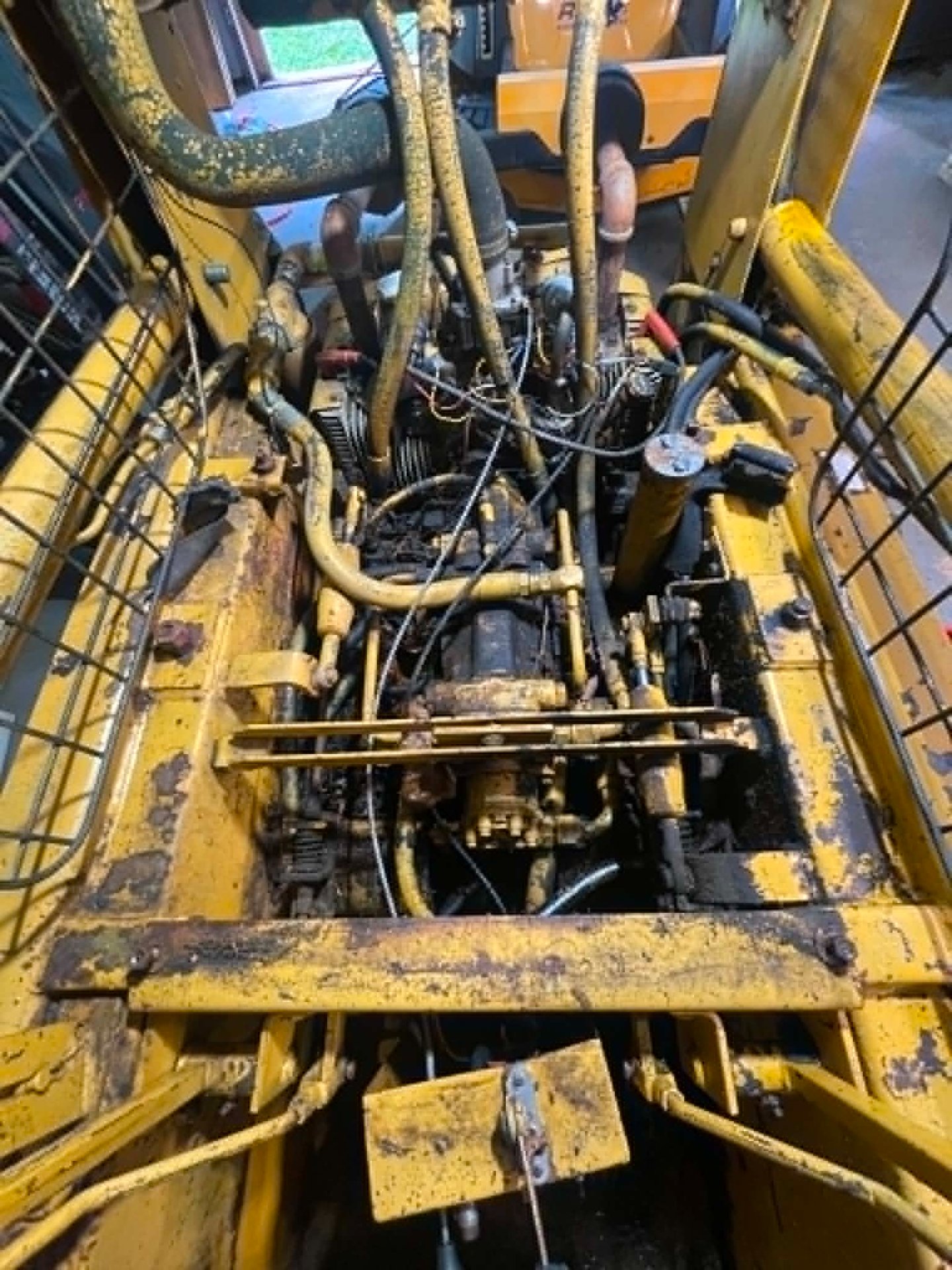
Well I got it spun around and pushed into the shop.... back hoses look ok, fronts are worn pretty bad. Pumped out about 5 gallons bad gas approximately 10-15 more in the tank? Started tearing down, what a mess under the covers.
 

Attachments

  • 288adbeb-c269-45d8-b304-d63eb46ff204.jpg
    288adbeb-c269-45d8-b304-d63eb46ff204.jpg
    493.9 KB

Latest posts

Back
Top